Fall/Winter 2008: I am gradually rebuilding this site with a new CMS and a new design.

Archive for the ‘Typecasting’ Category

The Second Monotype Caster Project

Tuesday, August 14th, 2007

My first casting session provided mixed results. On one hand, I am ecstatic that I finally made a solid piece of type in my own shop; but, on the other, that same casting session left me somewhat overwhelmed, in particular because the type that I cast did not match the copy that I typed in my first take at the keyboard.

After a good six hours at the machine I had decent type bodies and the machine was running smoothly, but character output was seemingly random! Wrong characters on this scale must be a product of a mismatch of Monotype keybars, keybanks, or stop bars. Perhaps a combination. One thing is clear from the notes that came with the Times New Roman: the mat case layout has ‘evolved’ over its lifetime!

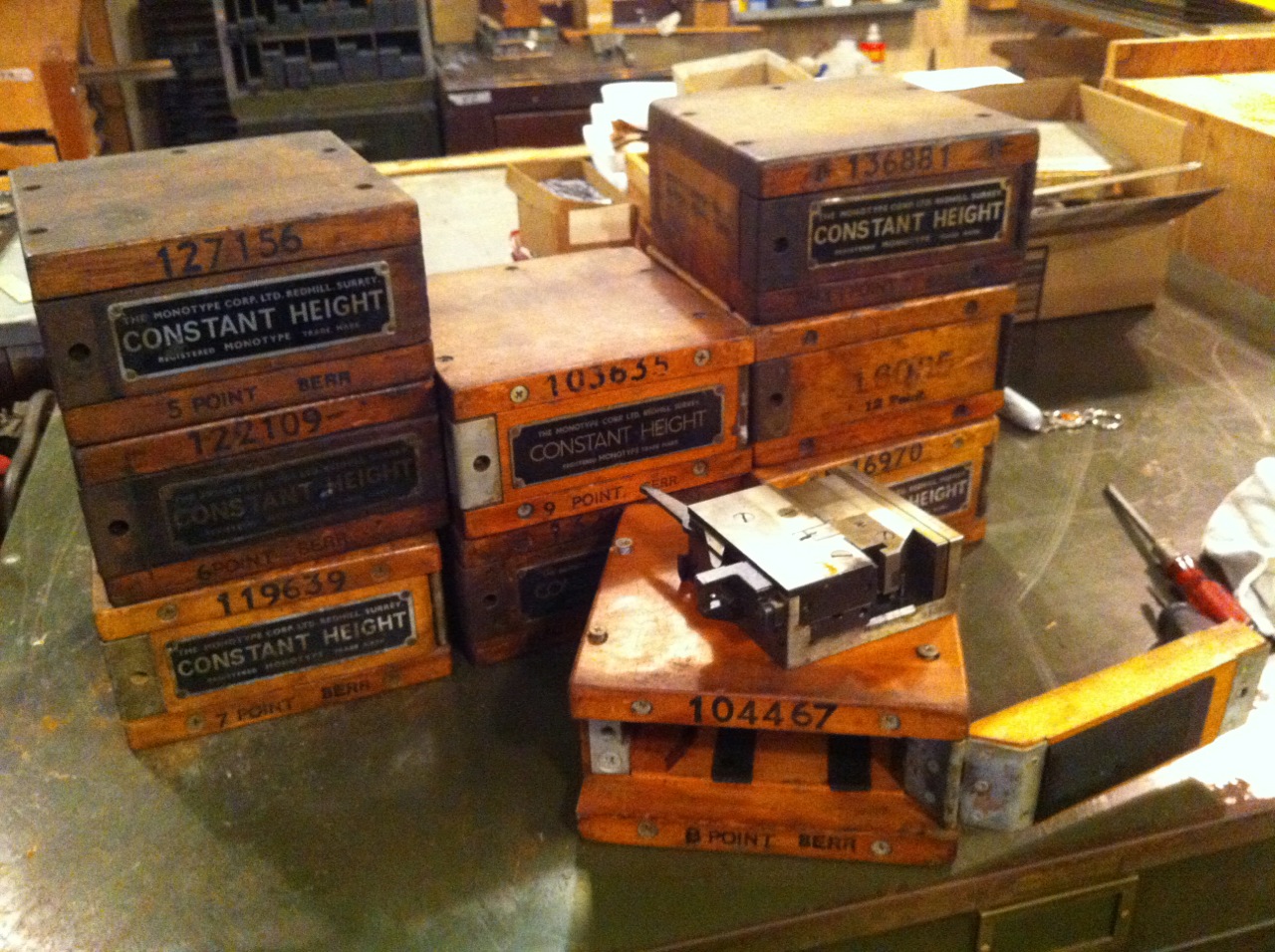
The type I was hoping to compose and cast was Times New Roman, from English matrices at 0.030 drive for American (Lanston) composition machines. Naturally, I had forgotten about the fact that these were 30 thousandths drive, so I cast with a English Constant Height mould. You know what that means, right? It means type that is 0.898 inches height-to-paper, a full 0.020 inches below the standard of 0.918 inches for American and British types. Oops.

With so many complications, it seems wise to attempt something simpler, in hopes of finding a shorter route to sucess. I’ve decided, for my next project, to simplify considerably and cast display type. The type is 14-point Bold Antique, Lanston Monotype #144, a face drawn for ATF in 1904 by Morris Fuller Benton.1 I wanted to cast 14pt because it is the smallest size of display type and with that fact certain concerns associated with casting larger sizes are alleviated. 18pt and 24pt are probably the easiest for me to handle physically—not at all fiddly like smaller types, and you can still hold several words of the type between your thumb and forefinger—but those sizes are a little more intimidating to cast. Bold Antique, as the name indicates, is a very bold, slab serif face. It lacks most of the subtlety, modulation and fine detail you find in a typeface like Centaur, and for this reason, it should pose fewer problems in casting than would a face with sinewy extremities.

I purchased this particular font of mats from Rich Hopkins or Hill & Dale Press & Typefoundy when visiting as a student and Monotype University 5. The dirty old box has a typed paper label which reads “The Kitsilano Times’. I have yet to identify this former, probably newspaper, publisher.

Each Lanston Monotype display matrix shows four numbers on the front of the mat. These are 1) the Monotype Series Number, which identifies the typeface (in this case, No 144 is Bold Antique); 2) the point size; 3) the normal wedge position; 4) and the special justification wedge position. Together, the positions of the two wedges determine the width of the type body setwise, that is, parallel to the reading direction. The table below shows the wedge positions and resulting character widths for each character of 14pt Bold Antique. When casting display type, it is customary and wise to cast all characters of a given width in sequence, then move on to the next widest character. Not only does this approach ensure consistency and precision, is also provides the most efficient process simply because it incurs the fewest adjustments of the caster.

Bold Antique Series No. 144
Lanston Monotype Machine Company
Line Standard: 0.1532 inches
Abutment Screw Packing Piece must be in place for all sizes in this table
Wedge Settings Width2 Characters
.0075 .0005
4 4 .0623 ‘ ; , . : !
5 4 .0761 l i
6 2 .0865 - t
6 4 .0899 ?
6 6 .0934 j
7 2 .1003 f
7 4 .1038 s I
8 2 .1141 z
8 4 .1176 r e c
9 4 .1314 y v
9 6 .1349 o
9 8 .1383 x q p g d b a
10 4 .1453 u n h S J
10 6 .1487 k
10 8 .1522 0 1 2 3 4 5 6 7 8 9 $
11 2 .1556 Z L
11 4 .1591 C
11 6 .1625 T
11 8 .1660 E F
12 6 .1764 V Q P O G
12 8 .1798 Y B
13 4 .1868 w U N D A
13 6 .1902 X R
13 8 .1937 H
14 2 .1971 K
14 8 .2075 &
15 4 .2144 m
15 8 .2213 M
18 2 .2525 W

Today I continued setting up the Monotype Composition Machine for display casting. I have several sources that detail the procedure of switching a comp caster over to display work…for both British and American machines. My 1916 Lanston edition of Casting Machine Adjustments is the most illustrative and breaks the process down into discrete steps.

This is the first time I’ve converted a caster from comp to display. Having completed the process, I am left wondering how difficult it will be to switch it back. While most of the adjustments are very simple 3, adjustments to the pump where a bit trickier for me. I didn’t take notes on previous positions of a few parts, and now that they’ve been adjusted, I cannot precisely reverse those adjustments.

Cast a blank matrix in the 15-8 position. Or maybe 16-8. A wide type…consistent and fairly solid, but with a little flash around the head. I attributed this to matrix wear, but now also believe that the metal was been too hot…720°+, if my auxiliary thermometer is properly calibrated (and it is indeed suspect).

The very first type bodies looked fairly good, well-formed and solid, but they got worse as time passed, first showing small blisters on the sides near the foot. The machine was splashing a good bit and a significant build-up of solidified type metal was forming on the underside of the mould stand. I reviewed the adjustments to pump as described in Casting Machine Adjustments and the later British The Monotype Casting Machine. While fiddling with the pump adjustments I realized that I still do not have a solid understanding of the mechanics of the Monotype pump, particularly when it comes to casting display type.

I put the cap ‘E’ mat in the holder and set the wedges to 11-8, which should result in a type measuring 0.1660 inches, setwise. After a few characters emerged with an overhang on both sides, it was obvious that I had set the wedges incorrectly. Was the gauge reading to be taken on the left edge or the right edge of the transfer wedge operating rod guide? Hmmm.

When I was sure that I has re-set the wedges correctly, I started the machine a cast a few short lines. I could see from the way the characters leaned in the type channel that there was still an overhang on the type. Indeed there was—but this time the overhang was only on one side and there appeared to be enough room on the body to accomodate the entire face and beard of the type. Good news.

From my experience at Monotype University as well as the numerous books I poured over in the last few years I’ve learned a little something about aligning the face of type to the type body. It turns out: I need a serious review! Though I managed to align the type using only the centering pin adjustments, the whole time I felt there was something else I should have adjusted first. More on that later.

Looking at this cap ‘E’ it was clear that the body was now too wide; the actual width 0.1854 inches, not 0.1660 that the 11-8 wedge setting should provide. Could I have set the wedges incorrectly again? As yet, I have not answered this question. In my next trip out to the foundry, I hope to resolve the 0.0194 inch difference in the set width. Something simple.

One final measurement gives some idea of the age and wear of both the type mould and the matrices with which I am casting. The height of the type, or height-to-paper, is a mere 0.9165+/-0.0005! Nominally “type-high” is 0.918 inches. More precisely, the standard is 0.9186 inches4.

References

1. McGrew, Mac. American Metal Typefaces of the Twentieth Century, 2ed., pp 44, 1993, Oak Knoll, New Castle DE.
2. Widths derived from “Display type wedge positioning” in ‘Monotype’ Composition Caster Manual, Volume 2, Part 37, Table 37.4, 1970, The National Committee of Monotype Users’ Associations with The Monotype Corporation Limited, London.
3 e.g. swinging the display gag block into position so that the centering pin lever picks up the transfer wedge shifter up on every cycle of the machine…only type is cast…no spaces.
4From the glossary entry for “height-to-paper” in The Monotype System, Lanston Monotype Machine Company, 1916 Philadelphia.
New Life in the Typefoundry

Tuesday, July 17th, 2007

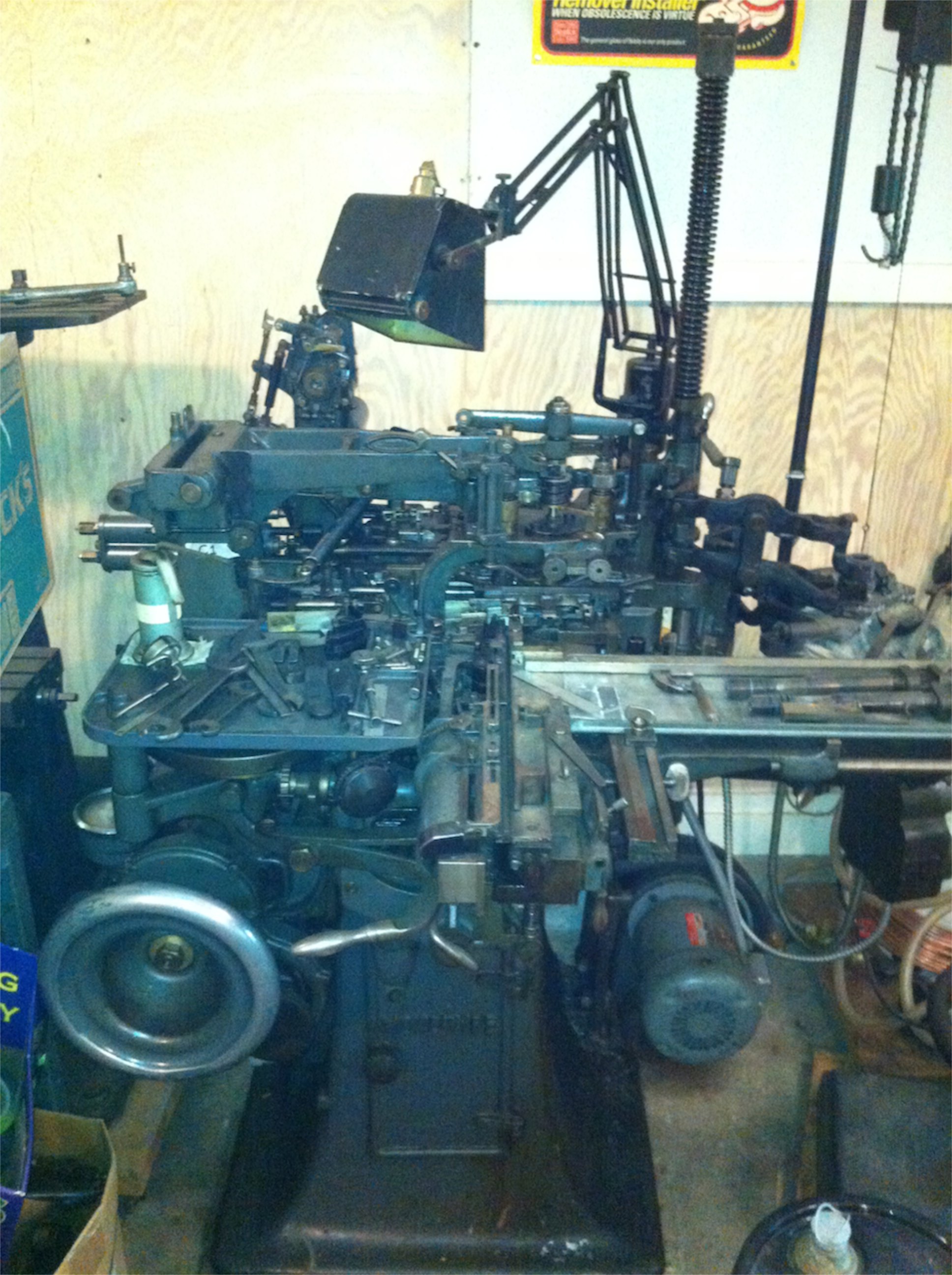
I’ve made time lately to work on setting up the typefoundry. Quite a lot has happened since the ‘Monotype’ caster from Heritage Letterpress made its way here—though most of the big changes have taken place just since May of this year.
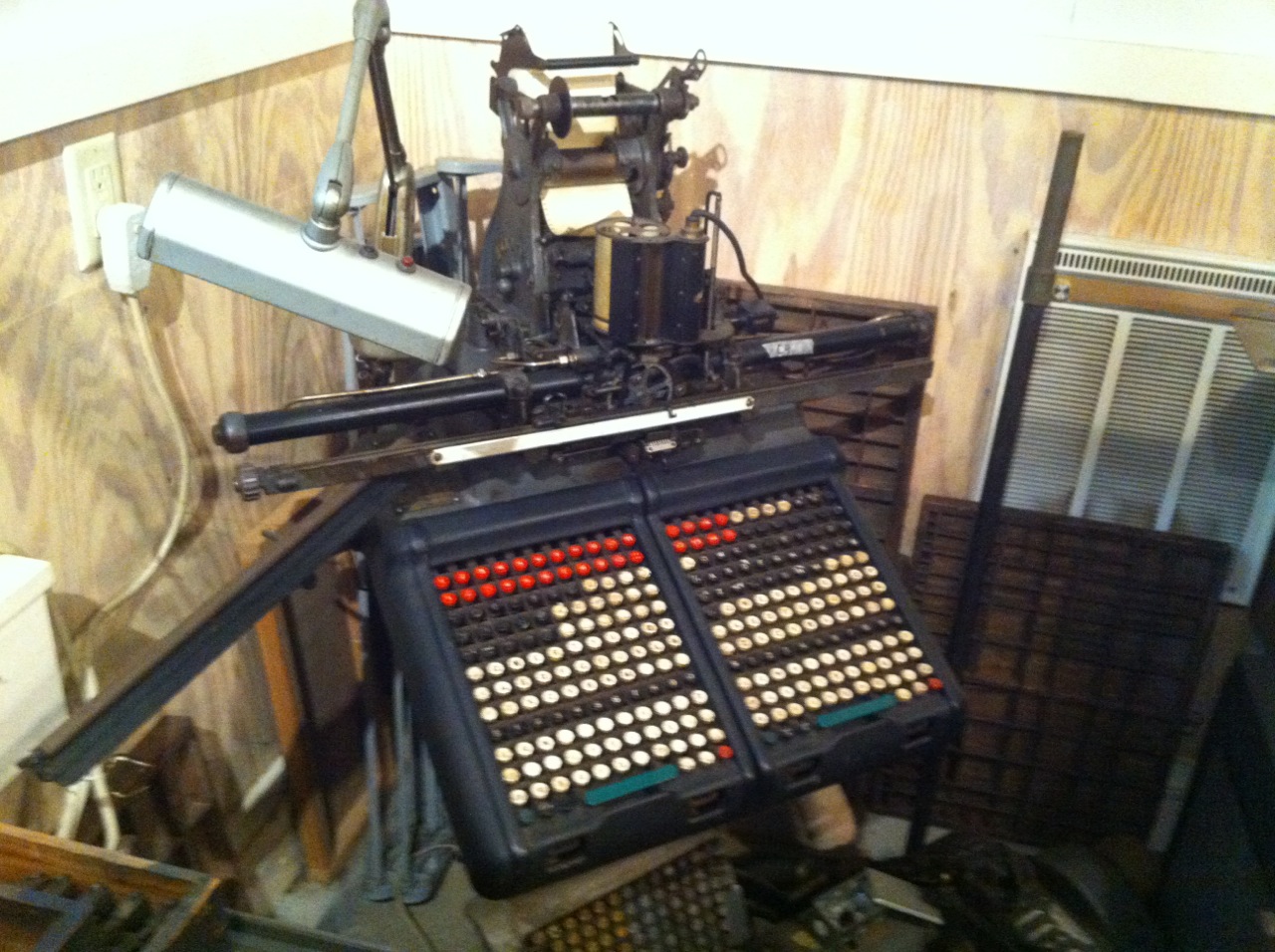
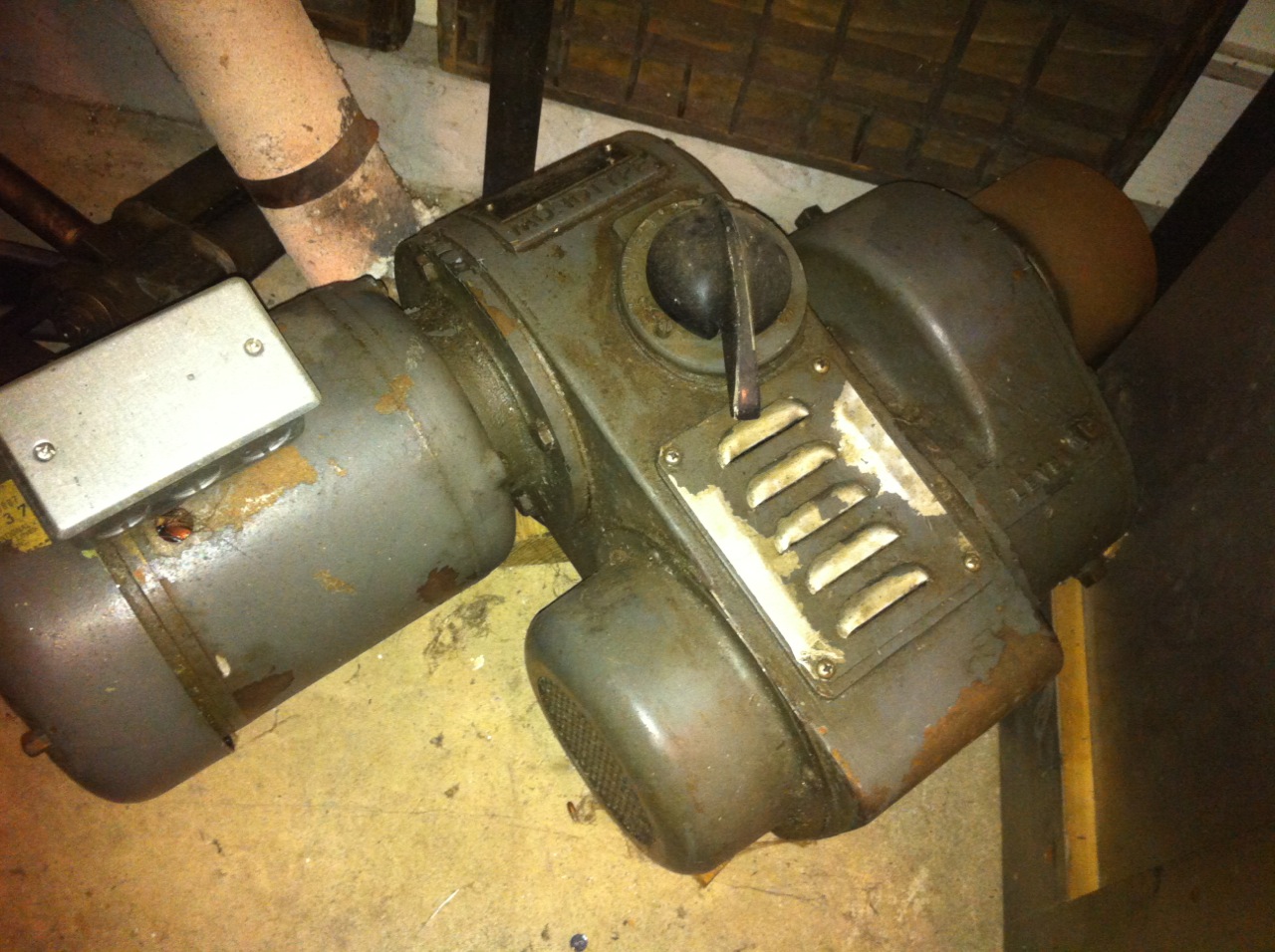
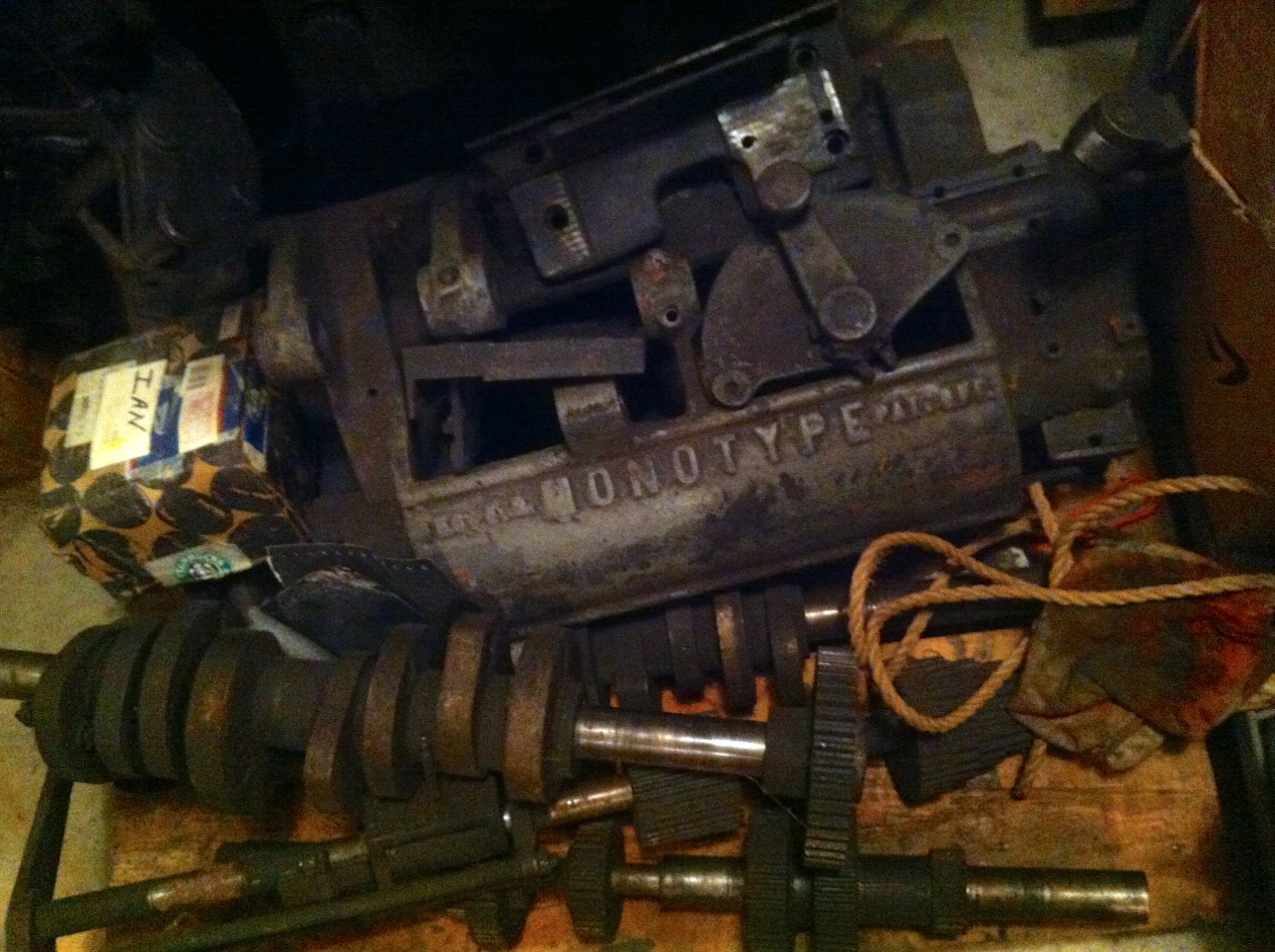
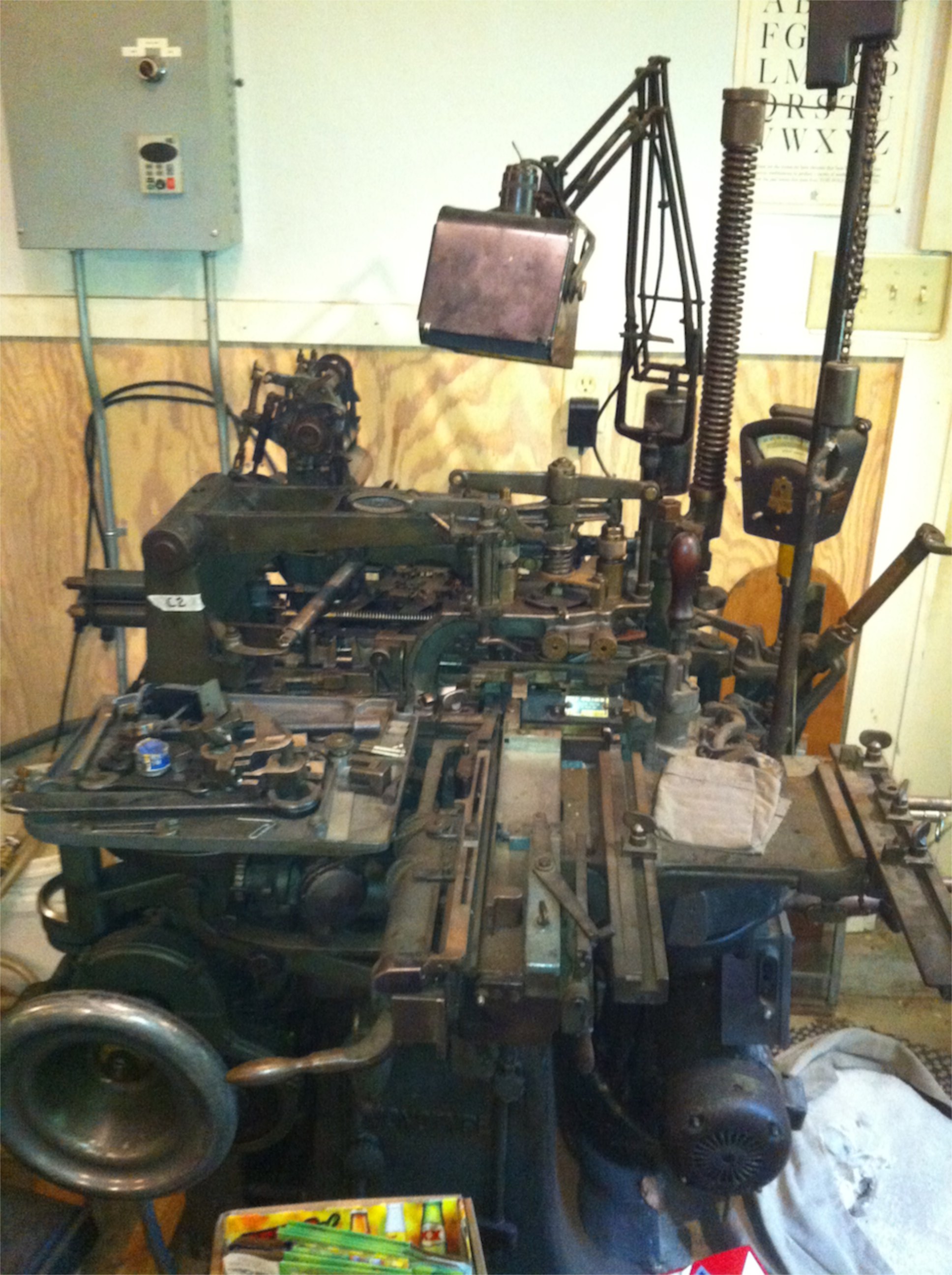
First, I acquired two more ‘Monotype’ casters from former foundry at Woodside Press in Brooklyn NY. One machine—a late model composition machine in very nice shape—is equipped with many of the later attachments including unit shift, unit adding, quadding and centering, plus a display attachment and a lead and rule attachment (all the things Theo Rehak would tell me to throw away!). The second machine is an old-style display caster with the big gear box; it came originally from Mouldtype in the UK.

These two new type casters arrived to a cramped shop, but there would have been no room at all had I not moved out the wrecked Duensing machine, which despite its potential as a display caster will become a source for very fine parts,…at least for now. The first part to come off was the electric pot. I put it on the comp from Heritage in exchange for it’s gas-fired pot. I’m a very glad not to have to deal with gas in this small shop.

With just enough space created and the new machines roughly in position, I turned my attention back to the electricity and the self-contained water cooling system I started building last year.

Photos and more of the story will come shortly…

The electrician came by to wire the motor of one of the new monotype machines and both of the electric pots. He and his assistant also connected two original Monotype work lamps that bolt onto the rear of the machine. Very illuminating…and very authentic looking!

I now have a working version the self-contained water cooling system—I guess you’d call it a prototype. While it is a loose tangle of hoses and copper tubing, the thing does work, that is to say, it moves a controlled flow of water through the caster and type mould. I have not yet tested it in a sustained casting session in order to demonstrate it’s cooling effectiveness. Once proven, I will hopefully find the time to build a compact structure to allow mobility and easy access to the main valves.

Typefoundry Inventory

Monday, January 1st, 2007

Typefoundry Inventory
The Private Press of Ian Schaefer

MACHINERY

English ‘Monotype’ Corporation Ltd. (English) Composition Caster, #285xx ex of Heritage Letterpress, Charlotte, NC.

English ‘Monotype’ Composition Caster, #28024 acquired of the late Paul Duensing, Watkinsville, GA. Damaged. This machine will hopefully be rebuilt as a sorts caster.

English ‘Monotype’ Composition Caster, #28345 acquired of Woodside Press/Howard Bratter, Brooklyn Navy Yard, Brooklyn New York. Machine is equipped with display attachment, varigear drive, unit adding, unit shift, quadding and centring, ingot feeder. Machine includes lead and rule attachement, not currently installed.

English ‘Monotype’ Combination Caster, #2xxxx acquired of Woodside Press/Howard Bratter. Machine is equipped with display attachment, old-style gearbox, quadding and centring attachment.

Lanston (American) Monotype Composition Bridge, #7xxx and other miscellaneous spare parts for composition caster.

Lanston Monotype Keyboard, #11335

MOLDS
Composition Molds

Lanston Monotype composition molds: 6, 8, 9, 10, 11, 12, 13, 14 & 18pt
English ‘Monotype’ composition moulds: 14 ‘doghouse’

Display Molds

Lanston Monotype Display Moulds: 12, 14, 16, 18, 24, 30 & 36pt – some duplicates, all need work

MATRICES
Composition Matrices

ENGLISH ‘MONOTYPE’
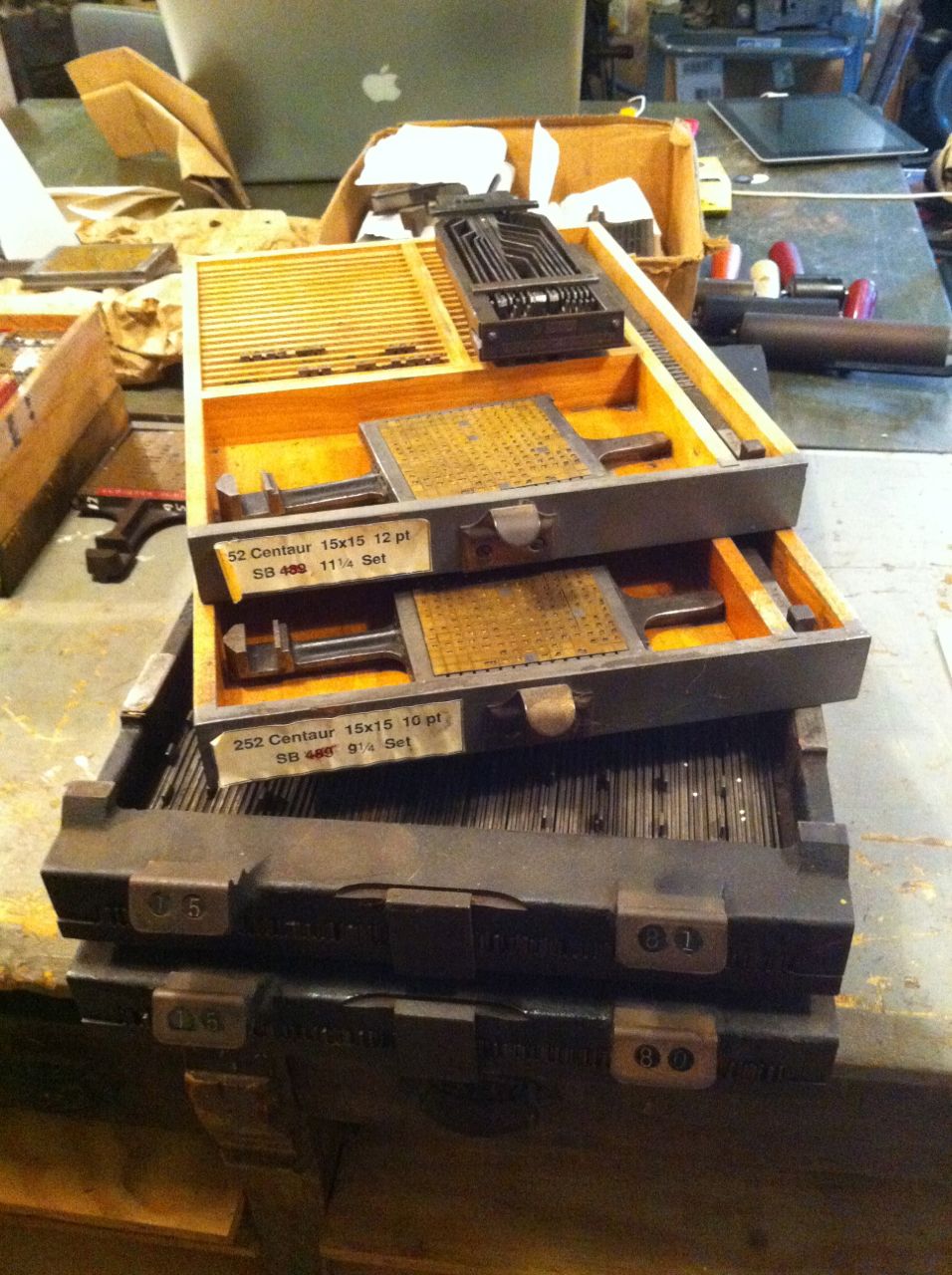
Centaur 252 roman & italic 10 & 12pt (0.030 drive)
Grotesque 216/126 216/126 8,9 & 11pt 15/17 (0.030 drive)
Times Roman 327/334 7, 8, 10 & 11pt; comp 421 7, 8, 10 & 12pt
Chess Sorts 14pt incomplete
Misc math sorts 14, 16 & 18pt

LANSTON MONOTYPE
Garamont 248 6 & 8pt; keybars; no wedges or stopbar
Helvetica 496 8, 9 & 10pt; wedges, keybar and stopbar
Cloister Black 95 12pt, S5
German 99 8, 10 & 12pt

Display Matrices

ENGLISH ‘MONOTYPE’
Times Roman 18, 24, 30, 36 & 48pt; italic 18, 24 & 36pt;

LANSTON MONOTYPE
Garamont 248(no to be confused with Garamond, as the Stanley Morrison face for Monotype Ltd was named) – roman, italic, swash 14, 18, 24, 30 & 36pt, small caps 14 & 18pt
Kennerly 268 Roman 24 & 36pt; italic 2681 14, 24, 30 & 36pt
Goudy Old Style 3941 italic 18, 24, 30 & 36pt
Cochin Open 262 36pt
#144 14pt
Century 157 14 & 18pt
Philadelphia Gothic 52 18 pt

MISCELLANEOUS MONOTYPE EQUIPMENT

16 Monotype S5 wedges, various sets-widths
‘Monotype’ Microscope
Monotype Lead and Rule Attachment, complete
Monotype Pump Piston Extractor
Monotype Controller paper spool rewinder, manual
Monotype Controller Paper

OTHER FOUNDRY EQUIPMENT
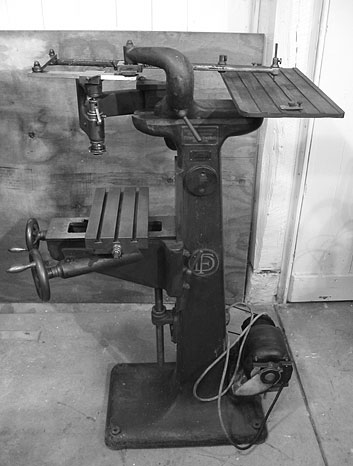
Friedrich Deckel G-1 Pantographic Engraver
Metal Thermometer
‘Monotype’ Mould Oiler

A New Monotype Caster

Saturday, July 8th, 2006


Here are the facts behind the previous entry, which was rather oblique and glorified because of my excitement:

Some two years ago I acquired a ‘Monotype’ Composition Caster – a machine that automatically casts individual printing types from molten metal and sets this type into justified lines, ready for printing. By automatically, I mean that the operation of the machine is controlled by a punched paper tape whose perforations are created by an entirely separate keyboard. For the printer, typographer or general enthusiast of machinery, a running ‘Monotype’ Caster is an amazing thing to witness.

I have had a great interest—okay, obsession—with these machines for several years. This passion culminated in my attending Monotype University 5, where I first met the amazing Mr Paul Duensing, from whom I acquired my first machine. Unfortunately, this caster was damaged in shipment! It took two years for me to fully recover from this minor tragedy and to locate a similar machine.

Finally, this spring…

Finally this spring, a similar, though slightly more worn out composition caster emerged at Heritage Printers, in Charlotte, North Carolina, under the care of Pat Taylor. As it happens, Pat Taylor was my tutor on the Monotype Composition Caster at Monotype University, so it seems fitting that I should acquire this ‘new’ machine from him.

With the expert help of Bill Welliver, the new caster made it safely back to my shop in Lititz, PA, where it has been lavished with preparations for its new assignment. In order to be fully operation at The Private Press of Ian Schaefer, the caster requires these accomodations:

  • 3-phase power to the 3/4 hp motor – this will probably be provided by a variable frequency drive, which should allow finer adjustment at low speed settings.
  • Propane gas to power the melting pot – the pot was previously feed by natural gas, which means that the burner orifices must be reduced, probably by soldering and re-drilling an even smaller hole.
  • Water coolant – my shop has no nearby water supply, so the casting machine moulds must be cooled by a recirculating water system. I plan to start building a unit based on the model designed by Jim Walczak, and presented at the 2004 ATF Conference.
  • Air power to control the machine at a steady 15 psi – this one is easy: I already have a very serviceable compressor.

I intend to document the progress here, along with photos of the ‘Monotype’ Caster and the entire shop.

The Silence Has Ended

Friday, June 16th, 2006

Monotype Composition Arrives
Two quiet years after entrusting the portage of my first caster to the brazen ineptitude of a common carrier, this printer’s shop will rattle with the nearly forgotten noise of productivity. On May 27th, after a careful, all-night drive from Charlotte to Lititz, and amid the curious flurry of too many helpers who knew what was at stake this time, the beautiful mongrel machine, bearing at least three distinct serial numbers on its numerous replaced parts, touched safely down on the cement floor. Four sources of power—air, water, gas, and electricity—will be brought to bear in the coming weeks. When the main lever is thrown for the first time, I am sure that the birds in the nearby lilac will flush.

Read more details and see photos of this caster

Photos of the Second ‘Monotype’ Move

Saturday, May 20th, 2006

Returning from Heritage Printers, Charlotte, North Carolina

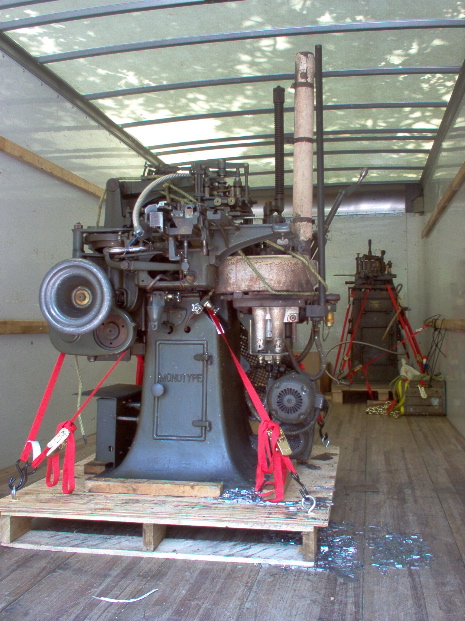
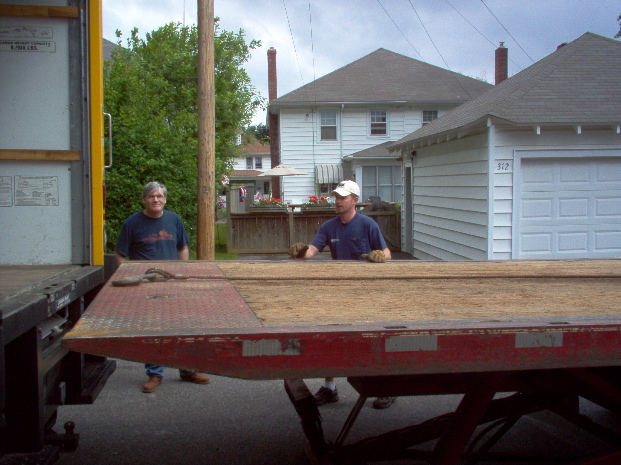
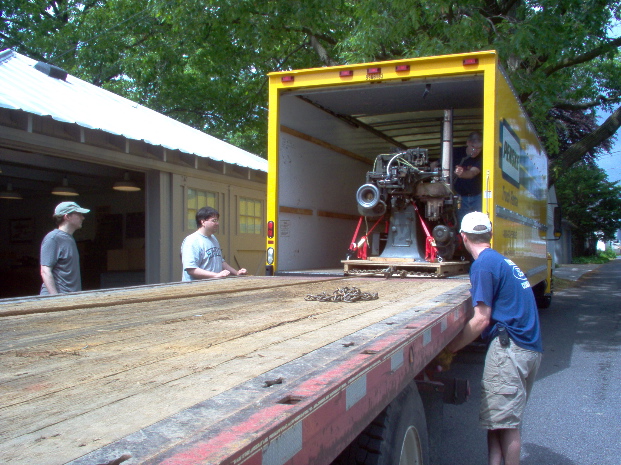
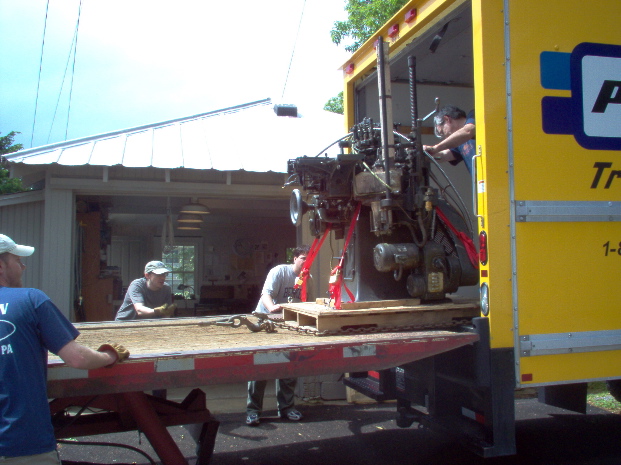
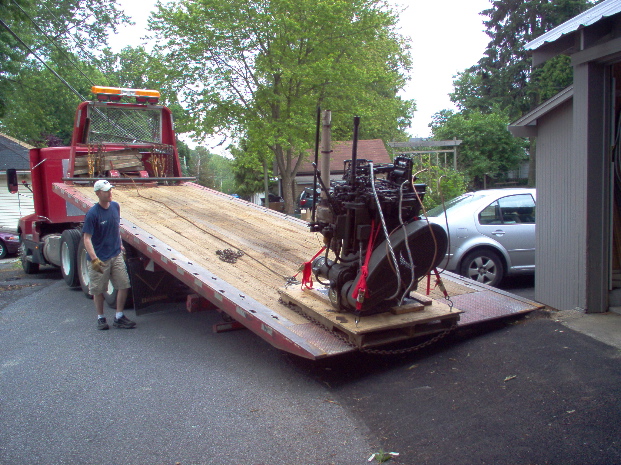
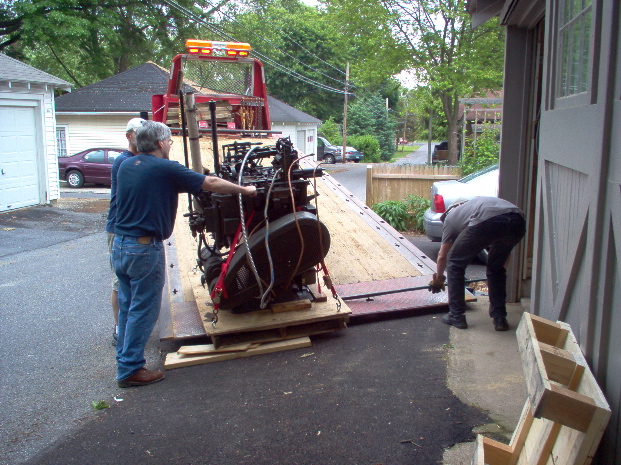
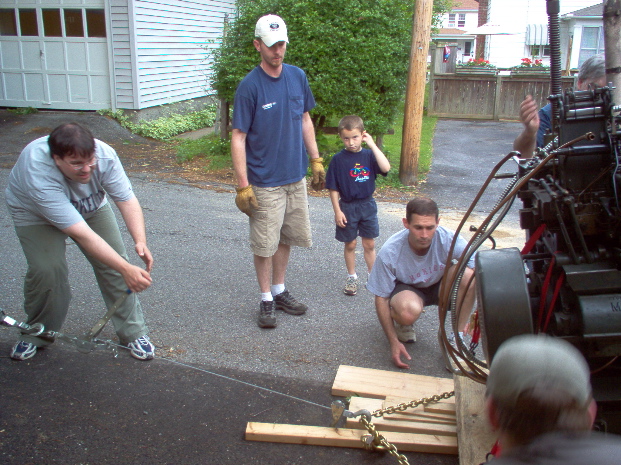
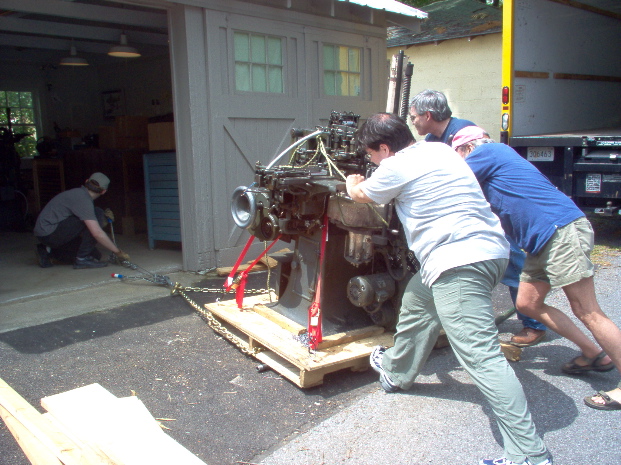
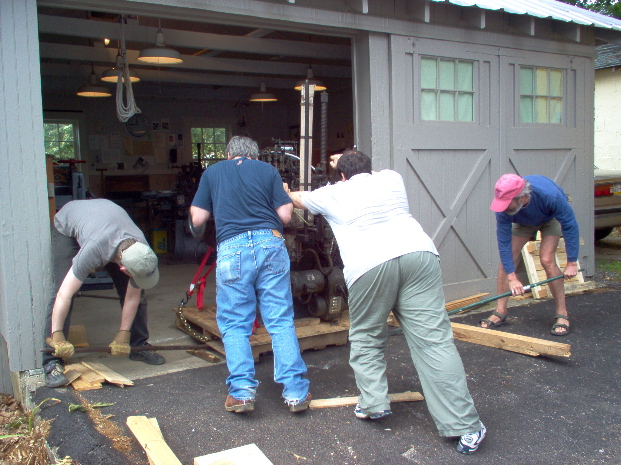
With the expert help of Bill Welliver and my numerous other helpers the new ‘Monotype’ Composition Caster acquired from Pat Taylor of Heritage Printers in Charlotte, NC, made it safely back to my shop in Lititz, PA, where it has been lavished with preparations for its new assignment.

Monotype Composition Caster is poised for unloading. Bill Welliver’s Thompson waits in the back of the truck.

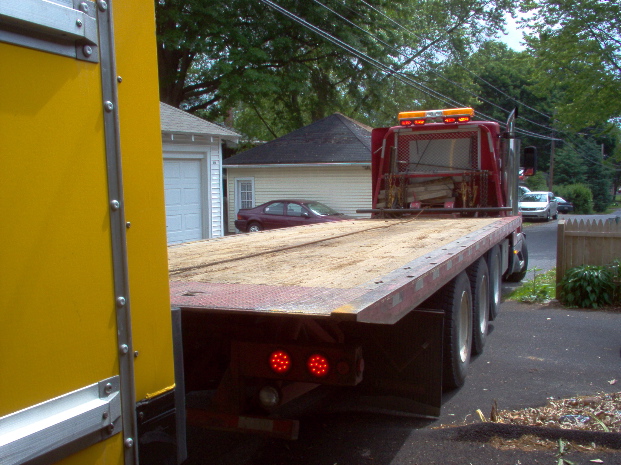
Adam Martin’s hefty rollback makes it’s final approach.

Precision alignment.

And,…PULL!

Easy, now.

How tiny the Monotype Caster looks on the bed of this truck!

Gulp.

Tim Schaefer (my dad) steadies as I try to figure out the odd angle.

Alas, Bill Welliver with the come along to pull it off the bed of the rollback.

More come-along plus brute force.

Hey there’s Reed Dixon on the right. Where’d he come from? Good timing!

The Deckel Pantographic Engraving Machine

Saturday, December 31st, 2005

It is a small pedestal machine.

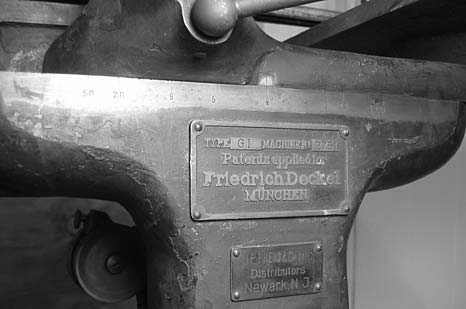
Friedrich Deckel. Type G.I. Machine No. 2751.

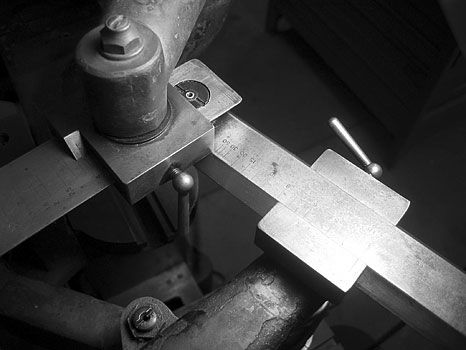
A close-up of the pantograph arms with engraved graduated scale.

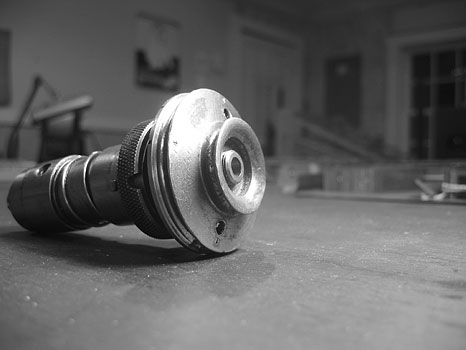
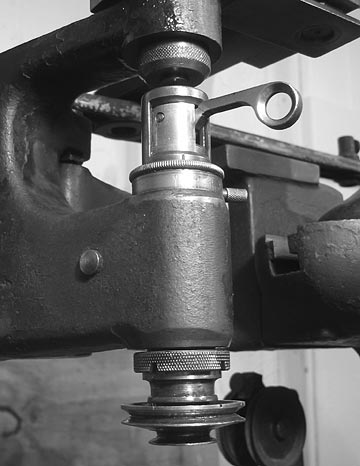
The spindle mechanism.

The spindle is easily removed from the machine.

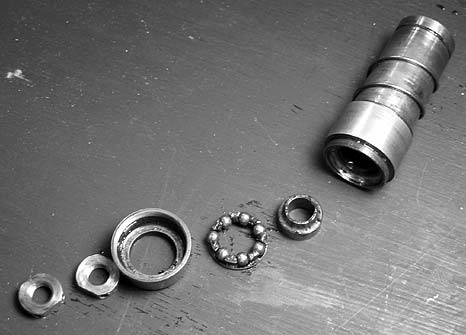
Top half of the spindle assembly, disassembled (gulp!)…

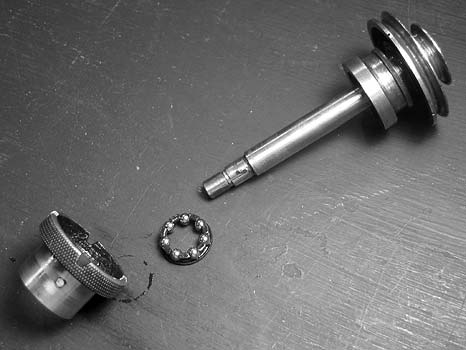
…and the bottom half of the spindle assembly. Spindle arbor and pulley should separate but are too tight to remove by hand.

Engraving machine

Saturday, February 19th, 2005

Deckel_Panto.jpg

Posted some photos of the old Deckel pantographic engraver that I recently brought into my shop. It needs some work, but will eventually, hopefully, be used to cut matrices or punches for the creation of new designs in metal printing type.

ATF Wordsearch

Tuesday, September 7th, 2004

I have posted the solution to the typefaces wordsearch puzzle I composed for the yet-to-be-published 2004 ATF Conference keepsake. I think it is a fairly tough puzzle: a 15 × 15 grid containing 31 words. You can generate your own wordsearchs, and many other types of puzzles with Discovery School’s Puzzle maker.

ATF Conference

Thursday, July 1st, 2004

I first became aware of the American Typecasting Fellowship several years ago. I learned of the organization—which aims to continue the tradition of hot metal typography—through Mike Anderson, who urged me to join after I had spent several exhilarating days in his printing shop and typefoundry. Mike also urged me to apply for Monotype University, which I successfully completed in August of 2003. I realized during that intense week that everyone involved in Monotype University—including some of the students—was a member of ATF as well. The two are essentially inseparable. It is the vast body of experience, passion for the craft, and desire to pass it on to a new generation that brings them together.

Did I mention that the biannual ATF Conference is coming up, September 3-5?